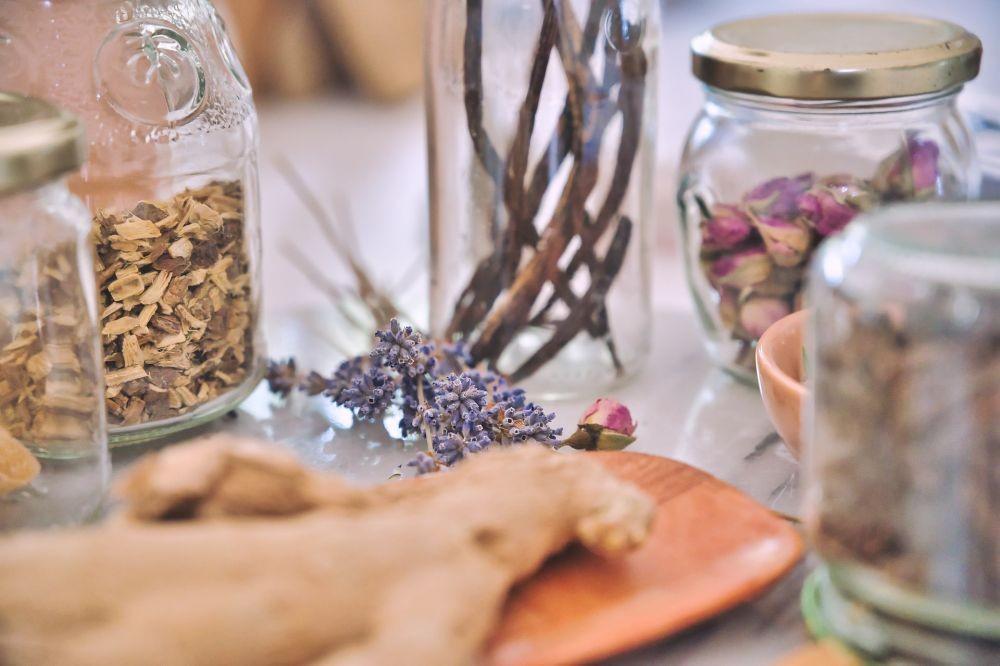
ilustrasi schisandra atau magnolia vines (pexels.com/현덕 김)
Schisandra adalah herbal tradisional yang digunakan dalam pengobatan Tiongkok. Senyawa lignan di dalamnya memiliki efek hepatoprotektif dengan meningkatkan enzim detoksifikasi hati.
Penelitian menunjukkan bahwa schisandra dapat meningkatkan kapasitas detoksifikasi dan melindungi hati dari kerusakan akibat toksin. Efek ini menjadikannya menarik dalam konteks paparan lingkungan modern.
Dosis dalam studi bervariasi, tetapi biasanya dalam bentuk ekstrak terstandarisasi. Efek samping relatif jarang, tetapi tetap perlu pengawasan bila dikombinasikan dengan obat.
Herbal dapat menjadi bagian dari pendekatan komprehensif untuk menjaga kesehatan liver. Milk thistle, kunyit, artichoke, licorice, green tea, dan schisandra adalah beberapa yang paling banyak diteliti dan menunjukkan potensi manfaat nyata.
Namun, penting untuk memahami bahwa alami tidak selalu berarti aman. Dosis, interaksi obat, dan kondisi kesehatan individu sangat menentukan efeknya. Pendekatan terbaik tetap menggabungkan gaya hidup sehat, pola makan seimbang, dan konsultasi dengan dokter sebelum mengonsumsi herbal secara rutin.
Referensi
Ludovico Abenavoli et al., “Milk Thistle in Liver Diseases: Past, Present, Future,” Phytotherapy Research 24, no. 10 (June 7, 2010): 1423–32, https://doi.org/10.1002/ptr.3207.
L. Abenavoli and N. Milic, “Silymarin for Liver Disease,” in Elsevier eBooks, 2017, 621–31, https://doi.org/10.1016/b978-0-12-804274-8.00045-x.
Susan Hewlings and Douglas Kalman, “Curcumin: A Review of Its Effects on Human Health,” Foods 6, no. 10 (October 22, 2017): 92, https://doi.org/10.3390/foods6100092.
Yunes Panahi et al., “Efficacy and Safety of Phytosomal Curcumin in Non-Alcoholic Fatty Liver Disease: A Randomized Controlled Trial,” Drug Research 67, no. 04 (February 3, 2017): 244–51, https://doi.org/10.1055/s-0043-100019.
Rolf Gebhardt, “Antioxidative and Protective Properties of Extracts From Leaves of the Artichoke (Cynara Scolymus L.) Against Hydroperoxide-Induced Oxidative Stress in Cultured Rat Hepatocytes,” Toxicology and Applied Pharmacology 144, no. 2 (June 1, 1997): 279–86, https://doi.org/10.1006/taap.1997.8130.
Rafe Bundy et al., “Artichoke Leaf Extract (Cynara Scolymus) Reduces Plasma Cholesterol in Otherwise Healthy Hypercholesterolemic Adults: A Randomized, Double Blind Placebo Controlled Trial,” Phytomedicine 15, no. 9 (April 18, 2008): 668–75, https://doi.org/10.1016/j.phymed.2008.03.001.
Cristina Fiore et al., “Antiviral Effects of Glycyrrhiza Species,” Phytotherapy Research 22, no. 2 (September 20, 2007): 141–48, https://doi.org/10.1002/ptr.2295.
T. G. J. Van Rossum et al., “Glycyrrhizin as a Potential Treatment for Chronic Hepatitis C,” Alimentary Pharmacology & Therapeutics 12, no. 3 (March 1, 1998): 199–205, https://doi.org/10.1046/j.1365-2036.1998.00309.x.
Zheming Yu et al., “Effect of Green Tea Supplements on Liver Enzyme Elevation: Results From a Randomized Intervention Study in the United States,” Cancer Prevention Research 10, no. 10 (August 1, 2017): 571–79, https://doi.org/10.1158/1940-6207.capr-17-0160.
Ryuichiro Sakata et al., “Green Tea With High-density Catechins Improves Liver Function and Fat Infiltration in Non-alcoholic Fatty Liver Disease (NAFLD) Patients: A Double-blind Placebo-controlled Study,” International Journal of Molecular Medicine 32, no. 5 (September 20, 2013): 989–94, https://doi.org/10.3892/ijmm.2013.1503.
Alexander Panossian and Georg Wikman, “Pharmacology of Schisandra Chinensis Bail.: An Overview of Russian Research and Uses in Medicine,” Journal of Ethnopharmacology 118, no. 2 (April 25, 2008): 183–212, https://doi.org/10.1016/j.jep.2008.04.020.
Agnieszka Szopa et al., “Bioreactor Type Affects the Accumulation of Phenolic Acids and Flavonoids in Microshoot Cultures of Schisandra Chinensis (Turcz.) Baill.,” Plant Cell Tissue and Organ Culture (PCTOC) 139, no. 1 (August 28, 2019): 199–206, https://doi.org/10.1007/s11240-019-01676-6.