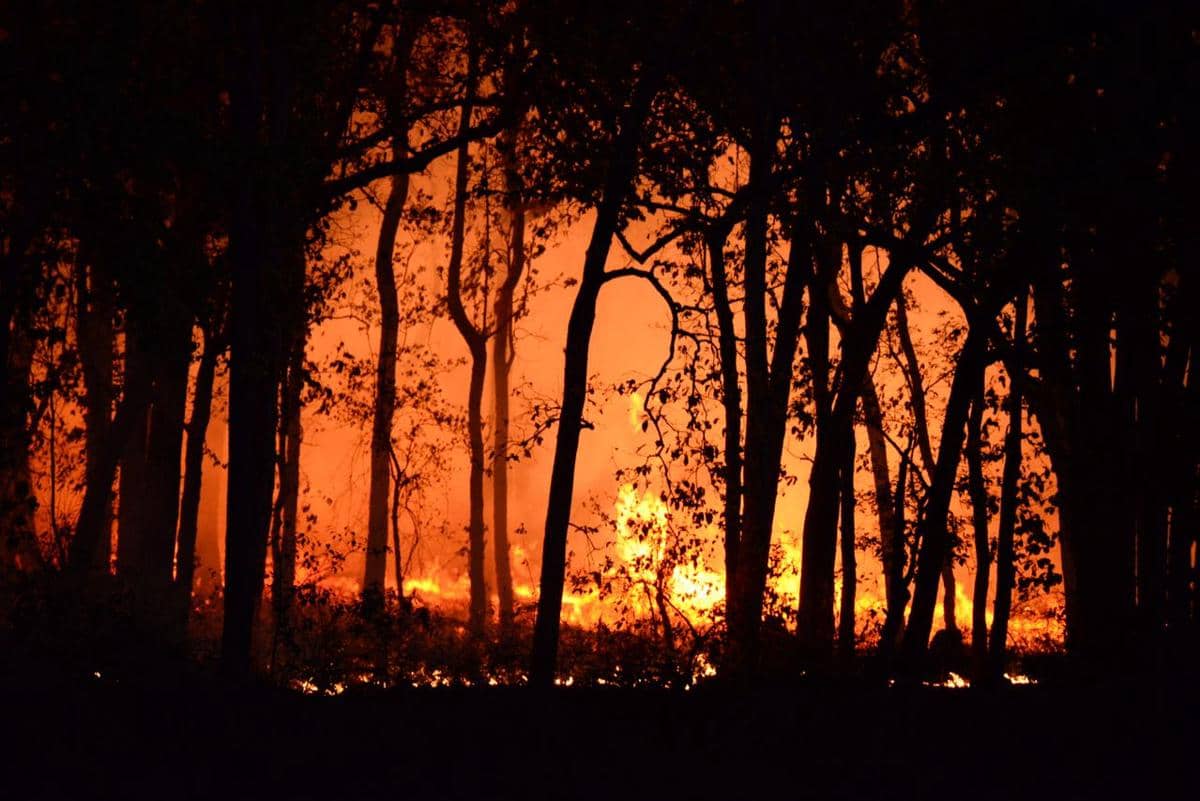
WHO telah memasukkan polusi udara sebagai salah satu faktor lingkungan yang berkaitan dengan risiko demensia. Namun, untuk PM2.5 yang secara khusus berasal dari karhutla, hasil penelitian belum seragam.
Itu mungkin terjadi karena karhutla bersifat episodik, komposisi asap berbeda antara satu kebakaran dan lainnya, dan memperkirakan paparan seseorang selama bertahun-tahun tidak mudah.
Dengan kata lain, menghirup asap karhutla tidak otomatis menyebabkan demensia, tetapi belum ada alasan untuk menganggap asap tersebut aman bagi otak.
Ketika kualitas udara memburuk akibat karhutla, mengurangi waktu di luar, menghindari aktivitas berat di tengah asap, menjaga udara dalam ruangan tetap bersih, dan menggunakan respirator partikulat yang sesuai saat harus keluar tetap menjadi langkah penting untuk mengurangi paparan PM2.5.
Referensi
World Health Organization, "Risk Reduction of Cognitive Decline and Dementia: WHO Guidelines, 2nd ed.," diakses Agustus 2026.
H. Hou et al., “Linking Particulate Matter Exposure and Neurological Disorders: Evidence from Epidemiology, Biomarkers and Mechanistic Studies,” NeuroToxicology (2025), https://doi.org/10.1016/j.neuro.2025.103375.
Ehsan Abolhasani et al., “Air Pollution and Incidence of Dementia: A Systematic Review and Meta-analysis,” Neurology 100, no. 2 (2023): e242–e254.
Boya Zhang et al., “Comparison of Particulate Air Pollution From Different Emission Sources and Incident Dementia in the US,” JAMA Internal Medicine 183, no. 10 (2023): 1080–1089, https://doi.org/10.1001/jamainternmed.2023.3300.
Holly Elser et al., “Wildfire Smoke Exposure and Incident Dementia,” JAMA Neurology 82, no. 1 (2025): 40–48, https://doi.org/10.1001/jamaneurol.2024.4058, retracted and replaced June 30, 2025.
Joan A. Casey and Holly Elser, “Notice of Retraction and Replacement. Elser H, et al. Wildfire Smoke Exposure and Incident Dementia,” JAMA Neurology 82, no. 9 (2025): 967–968, https://doi.org/10.1001/jamaneurol.2025.2148.
Stephanie E. Cleland et al., “Short-Term Exposure to Wildfire Smoke and PM2.5 and Cognitive Performance in a Brain-Training Game: A Longitudinal Study of U.S. Adults,” Environmental Health Perspectives 130, no. 6 (2022): 067005, https://doi.org/10.1289/EHP10498.