ilustrasi sakit kepala (pexels.com/Pavel Danilyuk)
Sebaiknya segera cari pertolongan medis darurat setelah cedera atau hentakan pada kepala jika muncul sakit kepala yang makin berat dan tidak hilang, muntah berulang, kejang, kelemahan atau mati rasa, bicara pelo, kebingungan, kehilangan kesadaran, sulit dibangunkan, atau ukuran pupil yang berbeda.
Gangguan keseimbangan mendadak, penglihatan kabur atau ganda, wajah mencong, kelemahan satu sisi tubuh, sulit berbicara, dan sakit kepala hebat yang muncul tiba-tiba juga merupakan tanda stroke butuh penanganan sesegera mungkin.
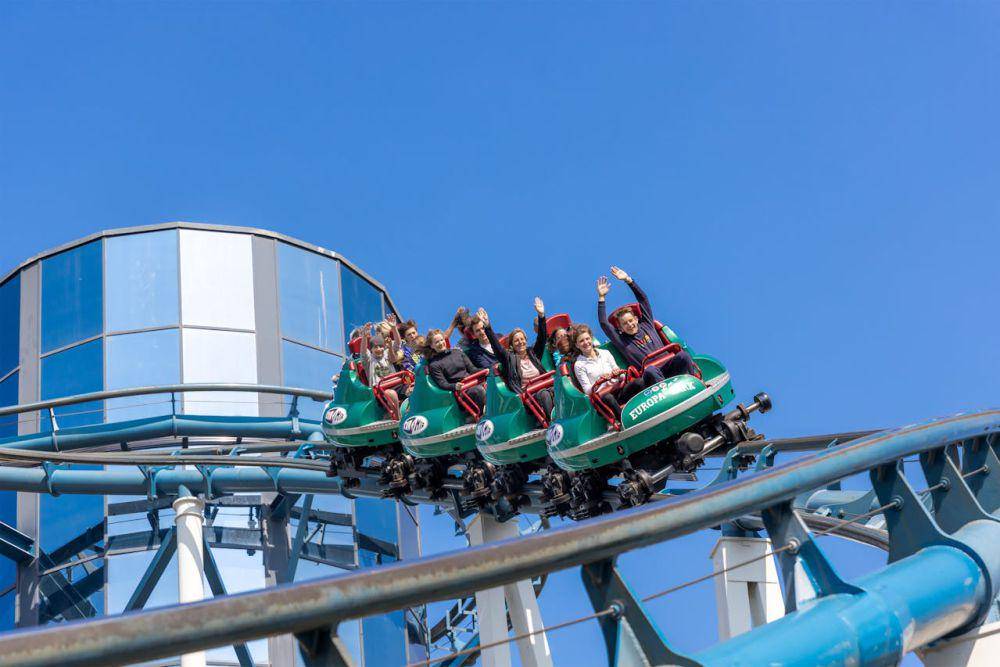
Cedera berat setelah naik roller coaster memang pernah terjadi, tetapi secara keseluruhan relatif jarang. Yang penting adalah mengenali gejala yang tidak biasa, dan segera cari pertolongan medis jika muncul tanda bahaya.
Referensi
Janam Patel et al., “Characterization of Neurological Injuries from Roller Coaster Rides among Minors,” American Journal of Emergency Medicine 98 (2025): 309–314, https://doi.org/10.1016/j.ajem.2025.08.035.
Robert J. Braksiek and David J. Roberts, “Amusement Park Injuries and Deaths,” Annals of Emergency Medicine 39, no. 1 (2002): 65–72.
David J. Freeman et al., “Significant Spinal Injury Resulting from Low-Level Accelerations: A Case Series of Roller Coaster Injuries,” Archives of Physical Medicine and Rehabilitation 86, no. 11 (2005): 2126–2130.
Ernesto Roldan-Valadez, M. T. Facha, Manuel Martinez-Lopez, and Patricia Herrera-Mora, “Subdural Hematoma in a Teenager Related to Roller-Coaster Ride,” European Journal of Paediatric Neurology 10, no. 4 (2006): 194–196, https://doi.org/10.1016/j.ejpn.2006.07.001.
Sebastian Rutsch, Wolf-Dirk Niesen, Stephan Meckel, and Matthias Reinhard, “Roller Coaster-Associated Subarachnoid Hemorrhage—Report of 2 Cases,” Journal of the Neurological Sciences 315, nos. 1–2 (2012): 164–166, https://doi.org/10.1016/j.jns.2011.11.026.
Douglas H. Smith and David F. Meaney, “Roller Coasters, G Forces, and Brain Trauma: On the Wrong Track?,” Journal of Neurotrauma 19, no. 10 (2002): 1117–1120, https://doi.org/10.1089/08977150260337921.
Davi Sa Leitao, Dercio Mendonca, Harish Iyer, and Cheng-Kai Kao, “Neurologic Complication after a Roller Coaster Ride,” American Journal of Emergency Medicine 30, no. 1 (2012): 249.e5–249.e7, https://doi.org/10.1016/j.ajem.2010.09.026.
Lauren Pickel et al., “Roller Coasters and Retinal Detachment: Case Series and Review of Acceleration-Deceleration Retinal Injury,” Case Reports in Ophthalmology 15, no. 1 (2024): 689–695, https://doi.org/10.1159/000540878.
Leon S. Moskatel and Liza Smirnoff, “Headache and Dizziness after Roller Coaster Rides: A Case Series of 31 Patients,” Canadian Journal of Neurological Sciences 50, no. 6 (2023): 914–917, https://doi.org/10.1017/cjn.2022.315.
Guido E. Pieles et al., “High g-Force Rollercoaster Rides Induce Sinus Tachycardia but No Cardiac Arrhythmias in Healthy Children,” Pediatric Cardiology 38, no. 1 (2017): 15–19, https://doi.org/10.1007/s00246-016-1477-5.
Centers for Disease Control and Prevention, “Symptoms of Mild TBI and Concussion,” diakses Agustus 2026.
American Stroke Association, “Stroke Symptoms and Warning Signs,” diakses Agustus 2026.