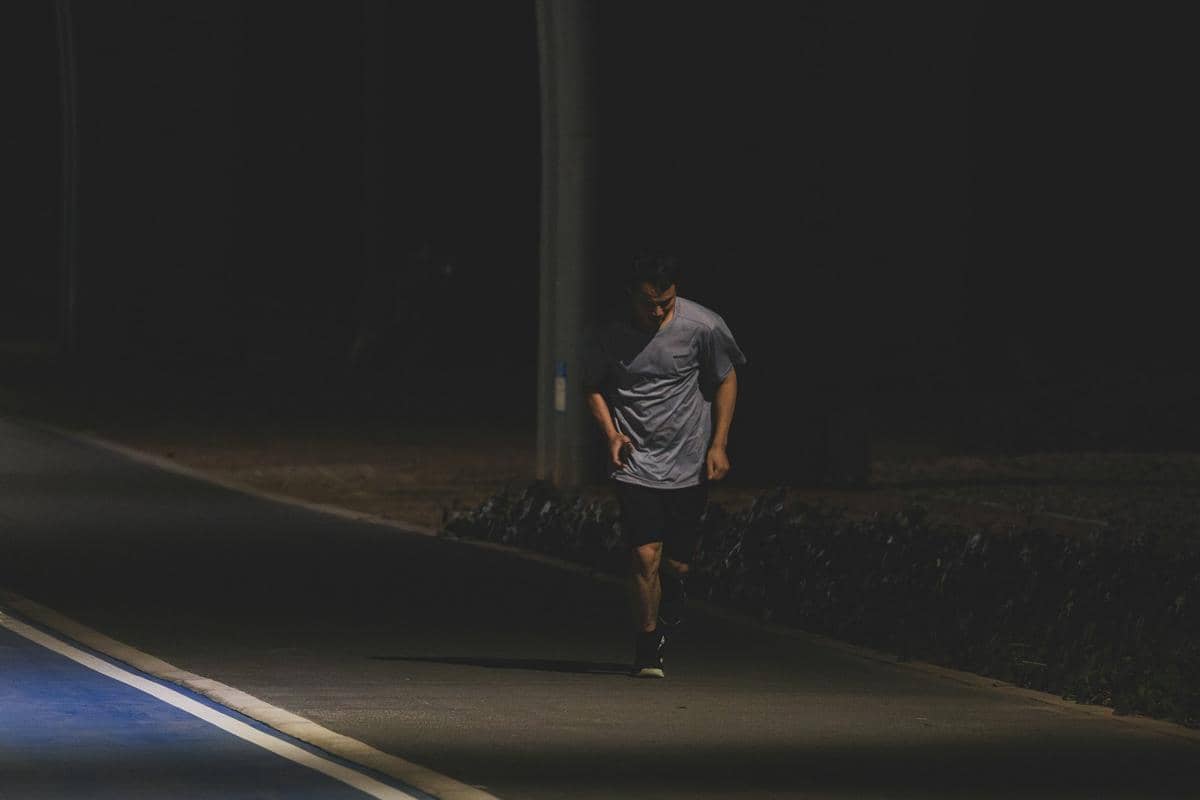
National Highway Traffic Safety Administration, “Stepping Out as an Older Adult—Be Healthy, Walk Safely” and “Conspicuity Enhancement,” accessed September 1, 2026.
David C. Schwebel et al., “Distraction and Pedestrian Safety: How Talking on the Phone, Texting, and Listening to Music Impact Crossing the Street,” Accident Analysis & Prevention 45 (2012): 266–271, https://doi.org/10.1016/j.aap.2011.07.011.
Richard Lichenstein et al., “Headphone Use and Pedestrian Injury and Death in the United States: 2004–2011,” Injury Prevention 18, no. 5 (2012): 287–290, https://doi.org/10.1136/injuryprev-2011-040161.
Christina Spengler et al., “Effects of Evening Exercise on Sleep in Healthy Participants: A Systematic Review and Meta-Analysis,” Sports Medicine 49, no. 2 (2019): 269–287, https://doi.org/10.1007/s40279-018-1015-0.
Josh Leota et al., “Dose-Response Relationship between Evening Exercise and Sleep,” Nature Communications 16 (2025): 3297, https://doi.org/10.1038/s41467-025-58271-x.
Centers for Disease Control and Prevention, “Heat and Athletes,” June 25, 2024; “About Heat and Your Health,” diakses Agustus 2026.
Dana M. Lis et al., “Dietary Restrictions in Endurance Runners to Mitigate Exercise-Induced Gastrointestinal Symptoms,” Journal of the International Society of Sports Nutrition 17 (2020): 32, https://doi.org/10.1186/s12970-020-00361-w.
D. Travis Thomas, Kelly Anne Erdman, and Louise M. Burke, “Position of the Academy of Nutrition and Dietetics, Dietitians of Canada, and the American College of Sports Medicine: Nutrition and Athletic Performance,” Journal of the Academy of Nutrition and Dietetics 116, no. 3 (2016): 501–528, https://doi.org/10.1016/j.jand.2015.12.006.
American Heart Association, “Warm Up, Cool Down,” diakses Agustus 2026.