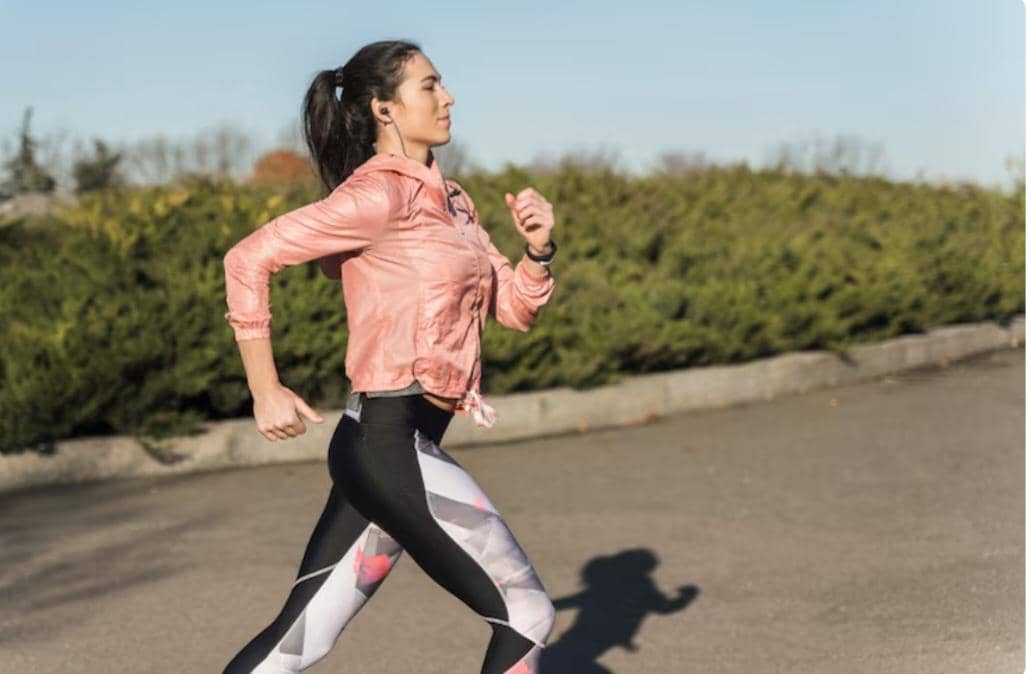
Meskipun pola umum ini didukung oleh penelitian, tetapi respons setiap perempuan terhadap siklus menstruasi bisa sangat berbeda. Faktor seperti tingkat kebugaran, nutrisi, kualitas tidur, dan stres juga berperan besar dalam menentukan performa.
Variabilitas individu sangat tinggi, sehingga pendekatan terbaik adalah memahami pola tubuh sendiri. Tracking siklus dan performa bisa membantu menemukan ritme pribadi setiap perempuan dalam berlatih.
Siklus menstruasi bukan penghalang untuk berlari, tetapi sebuah sistem biologis yang memengaruhi cara tubuh merespons latihan. Dengan memahami setiap fase, kamu bisa menyesuaikan intensitas, mengoptimalkan performa, dan mengurangi risiko cedera. Ketika ritme latihan selaras dengan ritme biologis, lari tidak hanya menjadi lebih stabil, tetapi juga lebih berkelanjutan dan menyenangkan.
Referensi
David M. Quadagno, “Exercise and the Female Reproductive System,” in Humana Press eBooks, 2000, 321–33, https://doi.org/10.1007/978-1-59259-016-2_18.
Kelly Lee McNulty et al., “The Effects of Menstrual Cycle Phase on Exercise Performance in Eumenorrheic Women: A Systematic Review and Meta-Analysis,” Sports Medicine 50, no. 10 (July 13, 2020): 1813–27, https://doi.org/10.1007/s40279-020-01319-3.
G Bruinvels et al., “Sport, Exercise and the Menstrual Cycle: Where Is the Research?,” British Journal of Sports Medicine 51, no. 6 (June 6, 2016): 487–88, https://doi.org/10.1136/bjsports-2016-096279.
Simone D. Herzberg et al., “The Effect of Menstrual Cycle and Contraceptives on ACL Injuries and Laxity: A Systematic Review and Meta-analysis,” Orthopaedic Journal of Sports Medicine 5, no. 7 (July 1, 2017): 2325967117718781, https://doi.org/10.1177/2325967117718781.
Xanne a K Janse De Jonge, “Effects of the Menstrual Cycle on Exercise Performance,” Sports Medicine 33, no. 11 (January 1, 2003): 833–51, https://doi.org/10.2165/00007256-200333110-00004.